
Methodology
Key Stage I (Grade 1 and Grade 2)
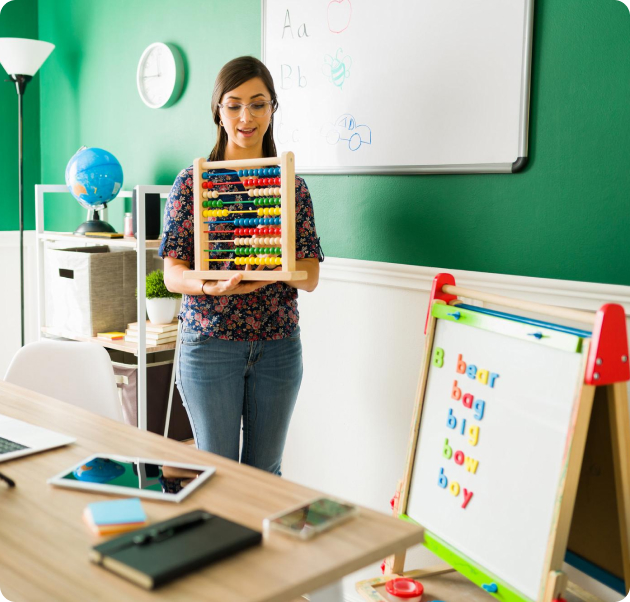
During key stage 1, students learn how to build on their early childhood experiences of investigating objects around them. They are encourages to think imaginatively and talk about what they like and dislike. They explore how familiar things work and enthusiastically talk about, draw and model their ideas. At this stage they also start learning ICT as part of their curriculum.
We ensure that children at Key Stage 2 learn to apply what they learn. Emphasis is laid on application of knowledge. Thus throughout the year the children have many opportunities to present and perform to a range of audiences – their classes, the whole school, parents – which builds their confidence and allows them to share their many talents.
At this stage, children are also introduced to various co-curricular activities, like Skating, Gymnastics, Dance and Music.
Key Stage II (Grade 3 to 6)
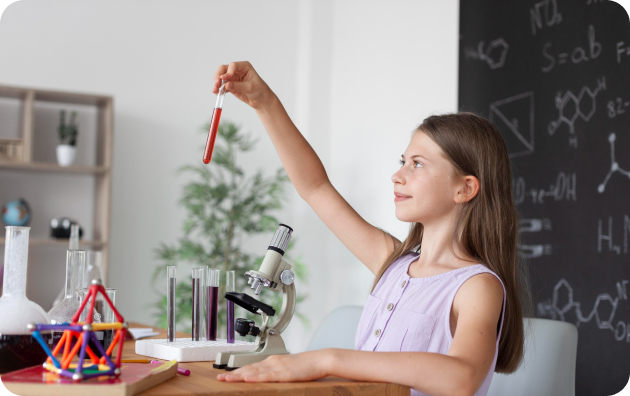
In order to help children progress towards their leaning goals, from Key Stage 2, a varied and simulating curriculum is introduced to meet the challenges of secondary school and beyond.
Students have the opportunity to participate in many extracurricular activities, Assemblies and house activities continue to be important to the learning experience at key stage II, as children build on their conceptual knowledge and learn team building and group work, they discover their interests.
In order to help children progress towards their learning goals, the main subjects taught are English, Maths, Science, Social Studies and Hindi. Activities that build vocabulary, fluency, increase confidence to explore and invent, increases speed and prowess and focus on scientific inquiry are encouraged. Elocution, database, recitation, extempore, storytelling, Dramatics, projects and ICT skills also become an indispensable part of the school curriculum.
Children have an array of activities to choose from, for instance, Budding creators Club, Young Thinkers Club, Little Chefs’ Club, Dance Club, Music Club, Makerspace Club, Skating, Karate, Cricket, Table Tennis, Football, Yoga, Guitar and Tabla.
They also gain a sense of responsibility and purpose as they take on the roles such as house captains, student council representatives and prefects. Students are actively involved in real life scenarios, situations and projects that enable them to build on ideas that create change and make a difference in their local community through an exposure to a value based curriculum.